
About Minichix Studio.

What I Create.
My work includes contemporary, science fiction, and fantasy themes. I sculpt busts and full figures in various scales, depending on the idea and how they’ll be displayed.

How I Approach Sculpting.
- Anatomy and balance
- A pose with a clear silhouette.
- Stability on the base
- Printability
- How will light travel across the forms.

What You Can Expect.
- STL files that are prepared for resin printing.
- Clear designs that make painting easier.
- Strong anatomy and natural poses.
- Models that stand out on display.
My Approach to the Craft.
Painting and sculpting influence each other in my process. I’m always testing, adjusting, and refining. Competitions, tight deadlines, and failed ideas have shaped how I work. Every project teaches me something valuable.
I’ve learned to simplify without losing impact.
I’ve learned that good structure saves time later.
I’ve learned that clear forms make painting easier.
I want my models to support your skills, not get in the way.
Painting Awards
Over the years I took part in several miniature painting competitions, both local and international. My work as a miniature painter, and recently sculptor, has been recognised with several awards in categories such as fantasy busts, historical figures, and large models.
Selected Awards
2026
- Bronze – Fantasy category, South Cheshire Militaire (Lioness)
- Bronze – Historical category, South Cheshire Militaire (The Defeated)
2024
- Gold – Busts & Flats category, South Cheshire Militaire (display)
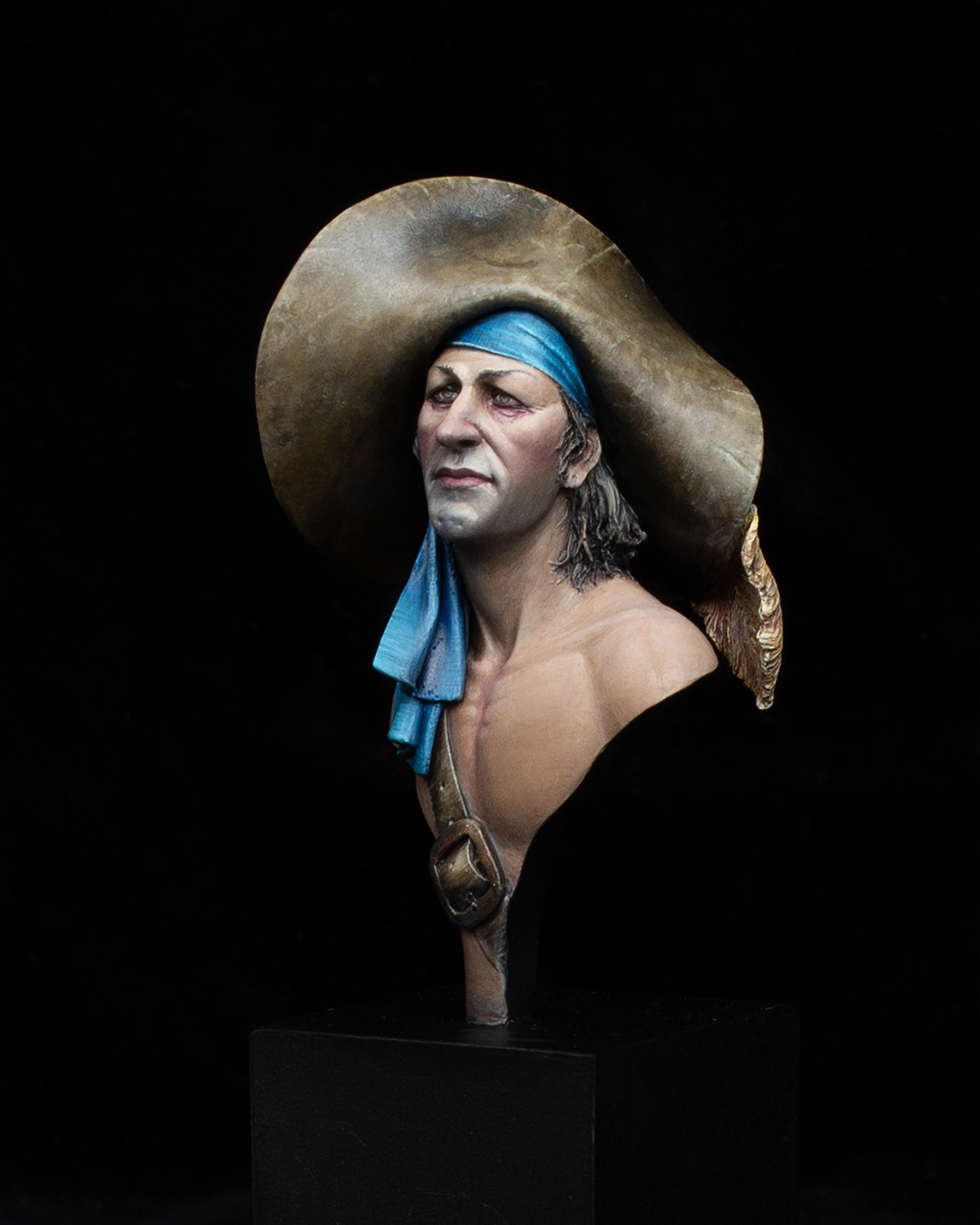
- Silver – Fantasy category, Sword & Lance (Alfonso the Sad Pirate)
2023
- Silver – Open category, Fen Model Show (display)
2016
- Gold – Painted Historical Bust, Euromilitaire (Germanic Warrior)
- Silver – Historical Figures Masters, Scale Model Challenge (Germanic Warrior)
2014
- Gold – Painted Fantasy Bust, Euromilitaire (Capt’n Sapo)
2011
- Gold – Fantasy category, Euromilitaire (Little Alice)
- Gold – Large Model category, Hussar (Anton the Infected)
- Silver – Fantasy Monster category, Salute (Eclipsante)
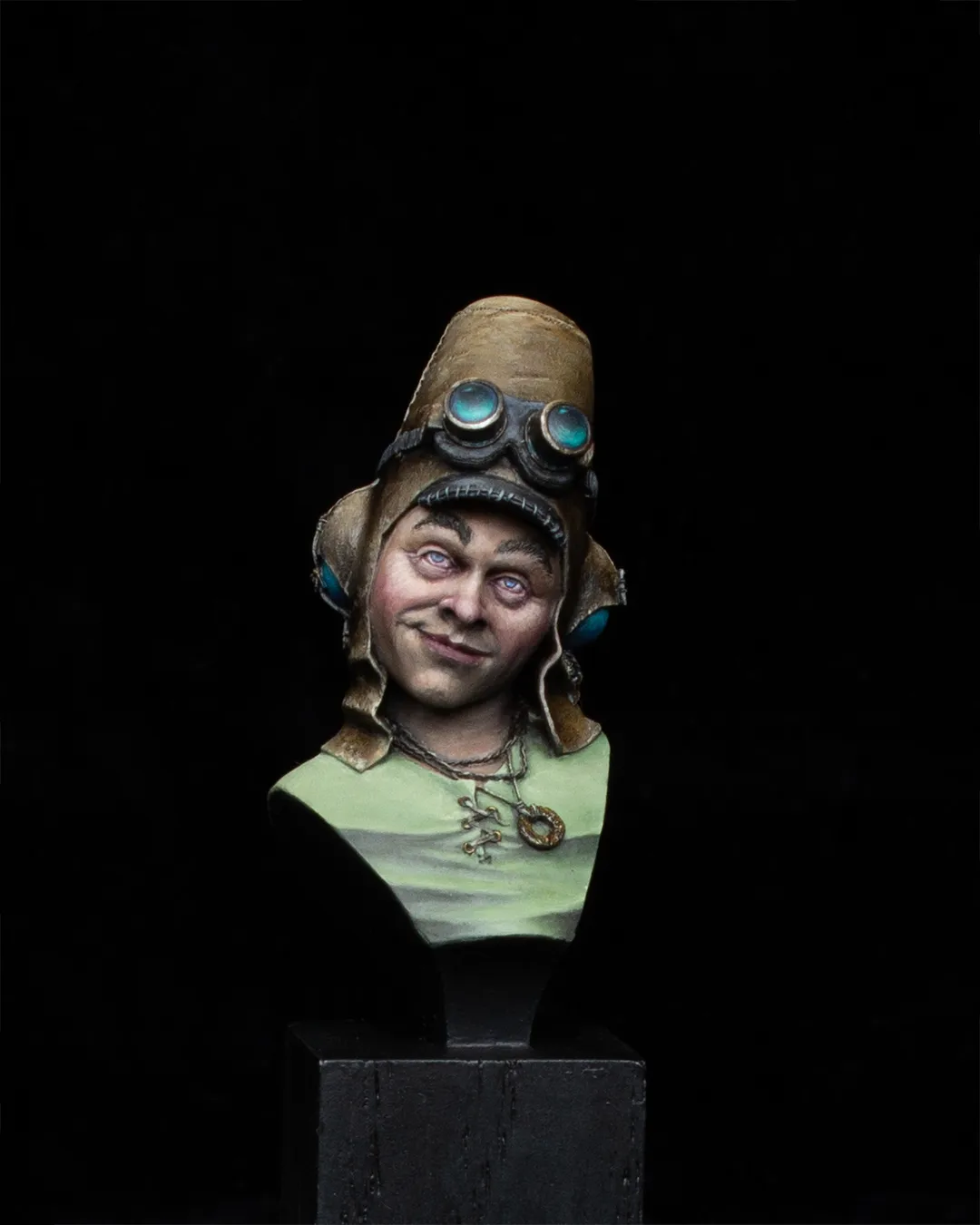
Selected Award-Winning Work



Frequently Asked Questions
Before you explore the shop or tutorials, here are a few common questions about how and why I work the way I do.
Why do you sculpt?
To be honest, I started sculpting to learn a new skill that would complement my painting. Very quickly I realised that it would give way more. I had a chance to create the miniatures I had always wanted to paint but couldn’t find anywhere.
There are many beautiful miniatures on the market, but at the same time, there are a lot of bad ones. I was frustrated by miniatures that looked great in the producer’s photos, but felt awkward under the brush. For me, anatomy, proportions and surface planning matter more than flashy details.
Why does painter focused design matter?
In traditional clay sculpting, the level of detail was limited by physical reality. You simply could not sculpt details so small that a painter could not handle them. Digital sculpting removed that limitation.
With a zoom function and high-resolution printers, you can add endless micro-details. That does not automatically improve the miniature. It is easy to overcomplicate a figure.
Detail is important. So are calmer areas that allow the eye to rest. A miniature needs structure and breathing space. Otherwise, painting becomes harder than it needs to be.
Why do you release fewer pieces?
I work alone for now, and each bust and miniature takes time to develop properly. I test, refine, and adjust my projects before releasing anything. I prefer to release fewer models and stand behind their quality rather than increase output for the sake of numbers.
Rushed releases lead to compromises. Fewer releases allow me to focus on structure, balance, and print reliability.
Why STL instead of physical products?
Digital files simplify the entire process both for my clients and me.
I do’t need to deal with casting, storage, or international shipping. That reduces overhead, limits unnecessary material use, and environmental impact.
For painters, it means flexibility. You can print the model when it suits you, in the scale you prefer, without waiting for delivery. There is no excess packaging and no transport emissions tied to each purchase.
Digital distribution avoids overproduction and keeps the process efficient and controlled.
