
Miniature Painting Glossary
Painting, traditional and digital sculpting, and 3D printing terms explained.
This miniature painting glossary explains common terms used in painting, traditional and digital sculpting, and resin 3D printing.
From painting techniques and sculpting materials to unfamiliar 3D printing terminology, you’ll find short, practical definitions collected in one place. Some entries also link to more detailed articles and tutorials if you want to explore the subject further.
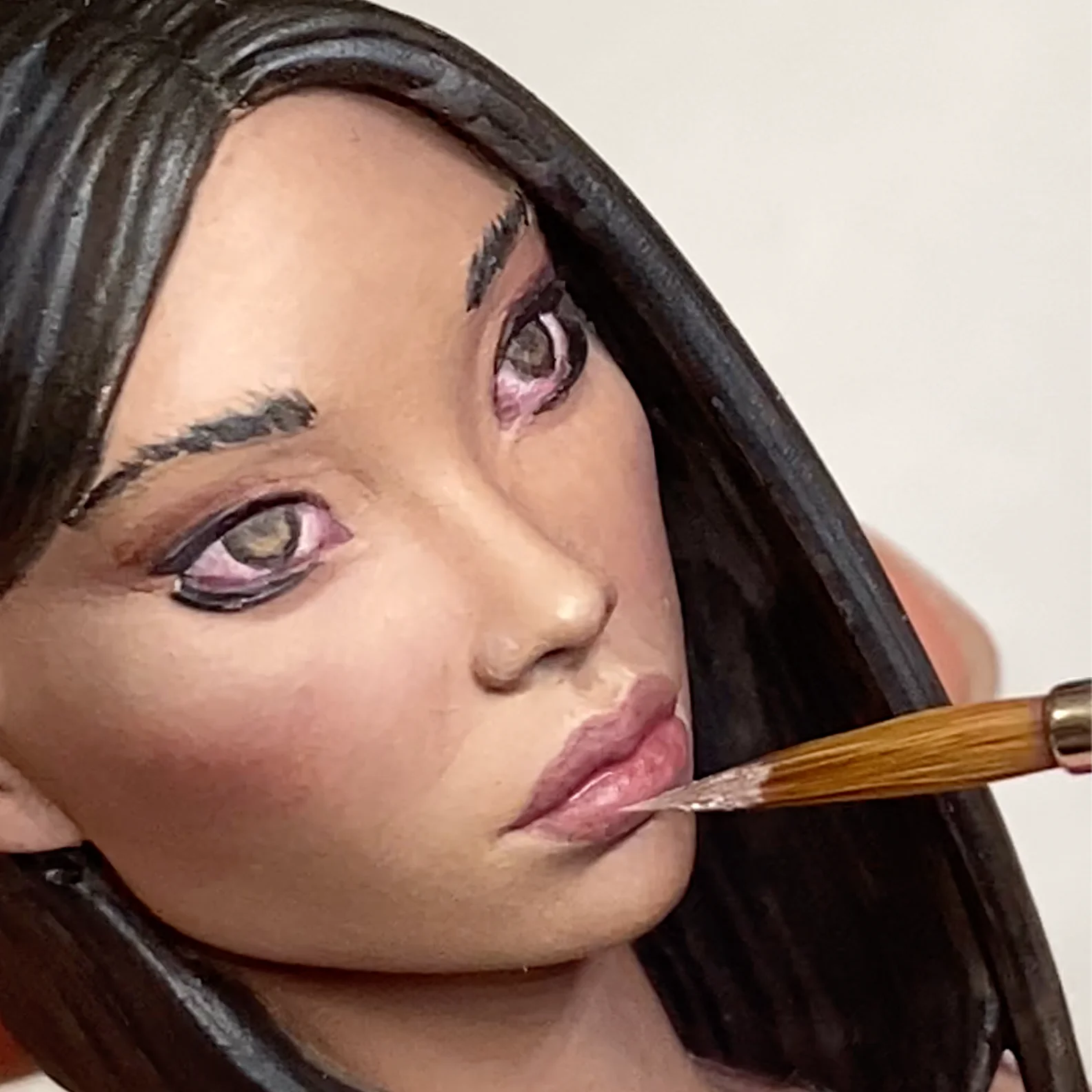
Miniature Painting, Sculpting & 3D Printing Terms
Acrylic Ink
Acrylic ink is a fluid, highly pigmented acrylic colour that you can use with a brush or airbrush. It is useful for glazing, tinting and strong transparent colour, but behaves differently from ordinary acrylic paint because of its much thinner consistency.
Acrylic Paint
Acrylic paint is one of the most widely used paints for miniatures. It consists of pigment dispersed in an acrylic polymer binder and can generally be thinned with water or acrylic mediums while wet. Acrylics dry relatively quickly to form a durable, water-resistant film, letting painters build multiple layers without long waits between them. They can be used in many different consistencies, from relatively opaque basecoats and layers to highly diluted glazes and washes, and can be applied with either a brush or airbrush. Acrylic paints come in both specialist hobby ranges and artists’ ranges, with differences in pigment concentration, opacity, consistency, finish, and other properties. Once fully dry, ordinary acrylic paint cannot be reactivated with water the way watercolour can.
Additive Sculpting
Additive sculpting involves creating a shape by adding material instead of removing it. In miniature sculpting, this typically means placing clay or putty onto an armature and then shaping the larger masses into smaller details.
Air-dry Clay
Air-dry clay is a modelling material that hardens through exposure to air rather than baking or a chemical reaction. It is convenient for some sculpting and basing work, although different brands vary greatly in strength, shrinkage and level of detail.
Airbrush
An airbrush is a small spray-painting tool that uses compressed air to atomise liquid paint into a fine mist and apply it to a surface. In miniature painting, it is commonly used for smooth basecoats, primers, gradients, filters, zenithal lighting, OSL and other effects where soft or controlled transitions are useful. Painters can adjust the paint flow to cover relatively large areas or produce fine lines and small details. Most miniature painters use a compressor to supply air, while the quality and size of the spray depend on factors such as air pressure, paint consistency, nozzle and needle size, spraying distance, and trigger control. Paint usually needs to be suitably thinned for airbrushing, although some paints are formulated to be used directly from the bottle.
Airbrush Thinner
Airbrush thinner is a liquid formulated to reduce paint viscosity so it sprays more easily through an airbrush. Unlike a flow improver, its main purpose is thinning the paint, although formulations may also contain ingredients that affect drying and flow.
Ambient Light
Ambient light is the general, indirect light that fills a scene rather than coming directly from one clearly defined source. It is created as light scatters and bounces off surrounding surfaces, allowing some light to reach areas not directly illuminated by the main light source. In miniature painting, ambient light helps explain why shadows are rarely completely black, softens extreme contrast and can introduce subtle colours reflected from the surrounding environment.
Analogous Colours
Analogous colours are colours that sit next to each other on the colour wheel, such as blue, blue-green and green. Because they share similar colour characteristics, they tend to work together harmoniously and can create smooth, natural-looking transitions. In miniature painting, analogous colour schemes can create a unified palette, develop subtle colour variation, or shift gradually between neighbouring hues without introducing strong colour contrast
Anatomy
Anatomy is the study and understanding of the body’s underlying skeletal and muscular structure. In figure sculpting and painting, strong anatomical knowledge helps forms, proportions, and movement look believable, even when the style is exaggerated.
Anti-aliasing
Anti-aliasing is a setting used in digital imaging and some resin-printing workflows to soften visible stair-stepping or pixel-like edges. It can make surfaces appear smoother, but too much anti-aliasing may also soften fine detail.
Armature
An armature is the internal support structure (mostly made out of wires) around which a traditional sculpture is built. It helps establish the pose and proportions while giving soft sculpting materials enough support to hold their shape.
Assembly
Assembly is the process of putting a miniature together from separate parts. You glue the pieces according to the kit design or your own conversion plan. Clean assembly creates stronger joins and cleaner final results.
Atmospheric Perspective
Atmospheric perspective creates the illusion of distance by reducing contrast, saturation, and visible detail as objects recede from the viewer. Distant elements often appear lighter and may shift towards the colour of the surrounding atmosphere, while nearer elements retain stronger contrast and clearer definition. In miniature and display painting, painters can use this principle in dioramas and larger scenes to increase the impression of depth. It has also become particularly visible in recent years through the growing use of painted scenic backgrounds and backdrops in display pieces, where progressively softer, less saturated and lower-contrast distant scenery can create the illusion of a much larger environment within a very limited physical space.
Backflow/Back-bubbling
Backflow, or back-bubbling, occurs when airflow is forced backwards through an airbrush into the paint cup, creating bubbles. Painters sometimes use it deliberately to mix paint in the cup, but unexpected bubbling can indicate a blockage, a loose nozzle, or another problem in the airbrush.
Basecoat
A basecoat is the first main colour layer applied after priming. It provides the starting colour for later shading and highlighting, but it doesn’t have to be the midtone; painters may start with a shadow, midtone, or other chosen value depending on their method.
Basing
Basing is the process of building and finishing the ground or environment around a miniature. It can be as simple as texture and grass on a gaming base or as elaborate as a scenic setting designed to support the story and composition of a display piece.
Battle Damage
Battle damage is painted or sculpted wear that suggests a miniature has been damaged in combat. Chips, scratches, scuffs, dents and burn marks can all contribute, but their placement should still make sense for the material and story.
Binder (Paint Binder)
A binder is the material in paint that holds the pigment particles together and forms a film that attaches them to the painted surface as the paint dries. In acrylic paint, the binder is an acrylic polymer. The type and amount of binder influence properties such as adhesion, durability, flexibility and finish. Binder is therefore one of the basic components of the paint itself, rather than something miniature painters normally mean when they talk about adding medium to their paint.
Black Lining
Black lining, also called dark lining, places a very thin dark line between neighbouring areas to strengthen separation and definition. The line does not have to be pure black; a suitably dark colour often gives a more natural result.
Blending
Blending is the process of creating a smooth or controlled transition between two or more colours or values. Miniature painters use techniques such as layering, glazing, feathering and wet blending to achieve different kinds of transitions.
Blocking Out/Blockout
Blocking out is the stage where you establish the major masses, proportions, and overall shapes before developing smaller forms and details. In sculpting, a good blockout lets you solve the pose and structure early, instead of polishing details on a form that isn’t working.
Blood Effect
Blood effects simulate fresh, partially dried or dried blood using colour, texture and finish. Fresh blood is usually darker red and glossier, while older, dried blood tends to become darker, browner, and less glossy, so the exact treatment depends on the effect you’re recreating.
Boolean
A Boolean operation combines, subtracts or intersects 3D forms to create new geometry. Digital sculptors often use Booleans for hard-surface elements, cutting sockets or keys, and preparing separate parts for printing.
Brush Belly
The belly is the fuller part of a paintbrush between the point and the ferrule. It holds paint and moisture, so a brush with a good belly can maintain paint flow for longer while still producing fine lines if it has a sharp point.
Brush Tip/Point
The point is the fine end of a brush where the bristles come together. A well-formed point gives precise control for details and fine lines, and can make a larger brush suitable for surprisingly small work.
Brush-on Primer
Brush-on primer is primer applied with a normal paintbrush rather than an airbrush or spray can. It is useful when spraying is impractical, but you must take care to avoid pooling or obscuring fine detail.
Brushstrokes
Brushstrokes are visible marks left by a brush moving through paint. They may be minimised for a smooth finish or deliberately retained to create texture and visual interest, so visible brushwork is not inherently a lower-level finish.
Build Plate
The build plate is the surface to which a 3D print attaches while it prints. Correct levelling and good adhesion are important, because a print that releases from the plate too early will usually fail.
Bust
A bust is a sculpture of a character’s head and upper body. Miniature busts often extend beyond the traditional head, shoulders, and chest to include arms, equipment, clothing, and other design elements. Busts are a particularly popular format within the display miniature painting community and are produced in a wide range of genres, including historical, fantasy and science fiction. Their generally larger scale provides more surface area for detailed work on faces, skin, eyes, hair, fabrics and other materials, making them well suited to advanced painting techniques and studies of character, expression, lighting and colour. Busts are commonly created as display pieces rather than gaming miniatures and are often mounted on a plinth for presentation.
Capillary Action
Capillary action is the movement of a liquid through very narrow spaces, often allowing it to travel along recesses, joins and panel lines without being manually brushed across the entire area. In miniature painting, this behaviour is particularly useful with thin, low-viscosity paints, washes and panel liners. When a loaded brush touches a recess or panel line, capillary action can draw the liquid along the narrow channel and distribute it around surrounding details. This makes it possible to define panel lines, separate adjacent elements and apply controlled recess shading with relatively little brush movement. The effect is especially useful for techniques such as pin washing and panel lining on armour, vehicles and other models with clearly defined recessed details.
Casting
Casting is the process of reproducing a master model by pouring or injecting material into a mould. Miniatures may be cast in resin, metal or other materials depending on the production method.
Chalkiness
Chalkiness is a pale, dusty or powdery-looking finish that can appear when paint dries very matte, when light colours are built too heavily, or when mixtures containing a lot of white lose colour intensity. Drybrushing, overworking semi-dry acrylics, and some pigments or mediums can contribute, but poor thinning is not the only cause.
Character Design
Character design is the process of developing a character’s visual identity through elements such as proportions, anatomy, pose, silhouette, facial features, clothing, equipment, hairstyle and other distinctive details. These choices can communicate personality, role, culture, setting and narrative before any additional explanation is given. In miniature sculpting, character design must also work as a three-dimensional object that can be viewed from multiple angles, with a clear silhouette and a visual hierarchy that prevents important features from becoming lost among smaller details. Practical considerations such as scale, material thickness, structural strength, part separation and printability or casting may also influence the final design. For display miniatures, a strong character design can also give the painter clearly defined materials, surfaces, and areas of visual interest that support creative choices in colour, lighting, and texture.
Chipping
Chipping simulates areas where a painted or coated surface has been damaged, and the material or layer underneath is exposed. The exposed colour may be darker, lighter, or metallic, depending on the surface, primer, and material being represented.
Clay Shaper/Colour Shaper
A clay shaper, also called a colour shaper, is a sculpting tool with a flexible silicone or rubber tip. It is useful for smoothing putty, shaping soft forms and working areas where a hard metal tool may leave unwanted marks.
Coffee Staining
Coffee staining is an unwanted drying pattern that occurs when pigment in a thin layer of paint is carried towards the edges of a wet area as the liquid evaporates. This leaves a visible darker ring or outline around the edge instead of an even layer of colour. In miniature painting, coffee staining is particularly common with washes, glazes, or heavily thinned acrylic paint, and can occur when too much liquid pools on the surface. Controlling the amount of paint, avoiding excessive pooling and allowing each layer to dry undisturbed can help reduce the effect.
Cohesion
Cohesion describes how successfully the different elements of a miniature or display piece work together to create a unified whole. Colour palette, lighting, composition, textures, basing, atmosphere and the treatment of individual materials can all contribute to cohesion. A cohesive piece does not require every element to look similar; contrast and variation can be important, but they should support the overall visual idea rather than making different parts of the miniature feel unrelated. In display painting, cohesion can also help connect the figure with its base or environment and reinforce the intended mood, setting or narrative of the piece.
Colour Contrast
Colour contrast describes the visual difference between colours placed together within a composition. It can result from differences in hue, value, saturation or colour temperature, and several forms of contrast may operate at the same time. For example, red and green can create strong hue contrast, while a vivid colour surrounded by muted colours creates saturation contrast. Miniature painters use colour contrast to separate neighbouring forms, improve readability, create visual interest and direct attention towards important areas or focal points.
Colour Harmony
Colour harmony describes how colours relate to one another and work together within a composition to create a visually coherent palette. Artists create harmony through relationships between hues, values, saturation and colour temperature rather than simply by choosing colours that are similar to one another. Miniature painters may use established colour relationships, such as analogous, complementary or split-complementary schemes, or develop a palette by repeating and mixing related colours throughout a piece. A harmonious palette can help unify different materials and elements while still allowing deliberate contrasts to establish focal points and visual interest.
Colour Modulation
Colour modulation is the deliberate variation of colour across a surface rather than painting it as a single uniform tone. In miniature and scale-model painting, this may involve controlled shifts in value, hue, saturation, or temperature to emphasise shapes, panels, and volumes and create greater visual variation. The technique is particularly associated with vehicle and armour painting, where different areas or panels may be lightened, darkened or subtly shifted in colour to strengthen their separation and make large surfaces appear less flat. Colour modulation may exaggerate natural lighting or colour variation for visual effect rather than reproducing strictly realistic illumination.
Colour Shift Paints
Colour shift paints change appearance depending on viewing angle. They create iridescent or pearlescent effects.
Colour Theory
Colour theory is the study of how colours relate to one another, how they behave when mixed or placed together, and how their relationships affect visual perception. It includes concepts such as hue, value, saturation, colour temperature, complementary and analogous relationships, contrast and colour harmony. For miniature painters, colour theory provides a practical framework for mixing colours, building coherent palettes, creating contrast and visual hierarchy, and directing the viewer’s attention. Understanding these relationships can also help painters create convincing light and shadow, vary materials and skin tones, control a piece’s mood, and make deliberate colour choices rather than relying solely on individual premixed colours.
Colour Wheel
A colour wheel is a circular arrangement of hues that shows their relationships to one another. It helps identify complementary, analogous, and other colour schemes, and understand how colours may interact in a palette.
Competition Piece
A competition piece is a miniature prepared specifically for judged display rather than ordinary gaming use. Painters usually pay particular attention to technical finish, presentation, composition and the criteria used by the event they plan to enter.
Complementary Colours
Complementary colours are pairs of hues positioned opposite one another on a traditional colour wheel, such as red and green, blue and orange, or yellow and violet. When placed side by side, they create strong hue contrast and can make each other appear more vivid. When mixed, complementary colours can reduce each other’s saturation and produce more neutral or muted mixtures, although the exact result depends on the pigments used. In miniature painting, complementary relationships can create focal points, balance a colour scheme, introduce subtle colour variation, control saturation, and create obvious colour contrast.
Composition
Composition is the deliberate arrangement and relationship of visual elements within a miniature, bust, scenic base or diorama. It includes factors such as the pose and orientation of the figure, placement of surrounding elements, shapes, lines, negative space, visual balance and the distribution of colour, value, contrast and detail. Strong composition guides the viewer’s eye through the piece, establishes a clear visual hierarchy and focal point, and makes the different elements feel connected rather than accidental or unrelated. In display painting and sculpting, composition can also support the mood, movement and narrative of a piece and influence how it is viewed from its intended primary angle or from multiple directions.
Contrast
Contrast is the degree of difference between visual elements and is one of the main tools used to create separation, readability and visual hierarchy in miniature painting. Painters can create contrast through differences in value, hue, saturation, colour temperature, texture, detail, edge sharpness and other visual qualities. Strong contrast tends to attract attention and can emphasise focal points or separate important forms, while lower contrast can make areas appear quieter or less prominent. Controlling where contrast is strongest, rather than applying the same amount everywhere, helps guide the viewer’s attention and contributes to the overall composition of a display piece.
Contrast Paints/Speed Paints
Contrast paints and speed paints are highly flowing, translucent paints designed to create a base colour and darker recess shading in a single application. They are useful for quick painting, but can also be used selectively as glazes, filters or transparent layers in more advanced work.
Conversion
A conversion is a miniature altered from its original design by changing, replacing, adding, or sculpting parts. Conversions can range from a simple weapon swap to extensive modifications that significantly change the original model’s character or appearance.
Cool Colours
Cool colours are colours perceived as leaning towards the cooler side of a colour relationship, commonly including blues, blue-greens and blue-violets. Warm and cool are relative rather than absolute properties, and although cool colours can appear to recede in many compositions, this depends on their value, saturation and surrounding colours.
Cupping
Cupping occurs in resin printing when a model’s shape and orientation create a cavity that can trap resin or generate suction against the release film during printing. This can increase printing forces and contribute to failures, so orientation, drainage and venting are used to avoid problematic cup-like areas.
Curing/Post-curing
Curing is the process by which photopolymer resin hardens when exposed to UV light during printing. Post-curing adds further controlled UV exposure after washing so the finished print reaches the strength and surface properties intended for that resin.
Decal/Transfer
A decal, also called a transfer, is a pre-printed design applied to a miniature to add markings, symbols, lettering or decoration. Water-slide decals are common in miniature modelling and can be blended into the painted surface with careful application, setting solutions and varnish.
Decal Softener
Decal softener is a solution used to make a water-slide decal more flexible so it can conform to curved, uneven or textured surfaces. It slightly softens the decal film during application, helping reduce wrinkles and making the finished marking appear more closely integrated with the painted surface.
Decimation
Decimation reduces the polygon count of a digital sculpt while preserving its visible surface detail. It is commonly used to make very dense sculpts easier to handle or export as STL files without unnecessarily huge file sizes.
Degreasing
Degreasing removes oils and release agents from a miniature’s surface. You usually wash resin or plastic parts with warm water and mild soap. This step helps primer stick evenly.
Desaturated Colour
A desaturated colour has lower saturation and therefore appears less vivid or intense than a more highly saturated version of a similar hue. You can desaturate colours by mixing them with greys, complementary colours, or other colours that reduce their intensity, although the exact result depends on the pigments used. In miniature painting, desaturated colours are often used to create more restrained or naturalistic palettes, separate areas of visual importance and provide contrast against more saturated colours. Controlling saturation can help direct attention towards a focal point without relying only on differences in light and dark.
Diffused Light
Diffused light reaches a subject from many directions rather than predominantly from a small, direct source. This produces softer-edged shadows and more gradual transitions between illuminated and shadowed areas. Examples include light from an overcast sky or light softened through a diffuser. In miniature painting, understanding diffused light can help you decide how strongly to define highlights and shadows: under highly diffused illumination, transitions tend to be softer, and the distinction between directly lit and shadowed surfaces is generally less pronounced than under a small, direct light source.
Digital Sculpting/3D Sculpting
Digital sculpting, also called 3D sculpting, is the process of creating three-dimensional forms in software using tools that imitate many aspects of working with physical clay. Programs such as ZBrush allow sculptors to build, cut, smooth and refine forms before preparing the model for rendering or 3D printing.
Display Miniature
A display miniature is a model painted or created primarily for presentation and close viewing rather than for regular gaming. Display miniatures often receive more time and refinement and may use larger scales, elaborate bases or more advanced painting techniques, although none of these is a requirement.
Drain Hole
A drain hole is an opening added to a hollow resin print so uncured resin and cleaning liquid can escape. Correctly placed holes also help reduce trapped pressure inside the model during printing.
Drying Time
Drying time is the period a paint or other material needs to become dry enough for the next stage of work. Don’t confuse it with curing time, as a paint layer may feel dry to the touch before it has fully hardened.
Dry Brushing
Dry brushing is a painting technique in which a brush with only a small amount of paint is lightly drawn or brushed across a textured surface, depositing colour mainly on the raised areas. Before application, most of the paint is removed from the brush, leaving it relatively dry compared with techniques using normally loaded or thinned paint. Dry brushing is particularly effective for quickly defining raised textures such as fur, hair, stone, chainmail, wood and rough ground. You can also use it to build highlights and surface variation. Pressure, paint amount, and brush softness affect the result; too much paint or repeated heavy application can create a chalky or dusty look and reduce the distinction between individual details.
Dual-Action Airbrush
A dual-action airbrush lets the painter control airflow and paint flow separately with a single trigger. Pressing the trigger down releases air, while pulling it back gradually increases the amount of paint entering the airflow. This lets the painter vary the amount of paint sprayed while working, giving greater control over line width, paint coverage, and the gradual build-up of colour. In miniature painting, dual-action airbrushes are commonly used for smooth gradients, controlled highlights and shadows, fine details, colour transitions and other work where precise control of paint flow is useful.
Dynamesh
DynaMesh is a ZBrush remeshing system that redistributes geometry across a sculpt, so you can push, stretch, add, or cut forms without worrying too much about the original topology. It is particularly useful during early blockout and exploratory sculpting.
‘Eavy Metal (GW Style)
‘Eavy Metal is the name associated with Games Workshop’s studio miniature-painting style and team. The style is known for very clean execution, controlled layering, strong definition and precise edge highlights designed to make details read clearly; Golden Demon entries, however, use many different painting styles and are not defined by the ‘Eavy Metal approach.
Edge Definition
Edge definition describes how clearly the boundary between two forms, surfaces or areas can be distinguished. In miniature painting, painters can strengthen an edge by increasing the contrast in value, colour, or temperature on either side, helping neighbouring forms remain visually separate and readable. Edge definition does not always require a painted outline; it can be created through the relationship between the areas themselves. Stronger edge definition can draw attention to important shapes and details, while softer or lower-contrast edges can allow less important areas to recede and help control the viewer’s focus.
Edge Highlighting
Edge highlighting is a technique in which a lighter colour is applied along the edges of a form to define its shape and details more clearly. It is particularly effective on armour, weapons and other objects with sharp or bevelled edges, where narrow highlights can suggest light catching the edge of the material. You can vary the width, brightness, and placement of highlights according to the form, material, and intended lighting, rather than treating every edge equally. Edge highlighting can improve readability and create a crisp, graphic finish, and is a characteristic technique of Games Workshop’s ‘Eavy Metal miniature-painting style.
Enamel Paint
Enamel paint is a solvent-based paint in which pigments are carried in a binder system that cures to form a durable paint film. In miniature painting and scale modelling, enamels generally dry more slowly than acrylic paints, giving the painter more time to blend, shade, and add weathering effects. They require a compatible thinner for thinning, cleaning and manipulating the paint and are often used alongside acrylics as part of a mixed-media painting process.
Enamel Wash
An enamel wash is a thin, fluid enamel-based product designed to flow into recesses, panel lines and around surface details. It is commonly used for shading, defining details and creating weathering effects on miniatures and scale models. Its relatively long working time lets you soften, move, or remove excess wash with a compatible thinner after application, giving the painter considerable control over the final effect. When applying enamel products over other paint layers, consider compatibility between the underlying surface, varnish, and solvent.
Environmental Lighting
Environmental lighting describes how light from the surrounding environment affects a miniature’s appearance. Light may be coloured or redirected by the sky, ground, walls, and other nearby surfaces before reaching the subject, influencing the colour and value of areas not illuminated solely by the primary light source. For example, cool light from the sky may affect upward-facing surfaces, while warm earth, vegetation or a coloured wall may reflect subtle colour onto nearby areas of a figure. Incorporating these influences can help a miniature feel more naturally integrated into its setting, rather than appearing lit independently of its environment.
Epoxy Putty
Epoxy putty is a two-part sculpting material that cures through a chemical reaction after you mix its components. Green Stuff, Milliput, Magic Sculpt and Apoxie Sculpt are common examples, each with different working and finishing properties.
Exposure Time
Exposure time is how long each resin layer is exposed to UV light during printing. Too little exposure can cause weak or failed prints, while too much can reduce accuracy and make fine details look swollen.
FDM Print
An FDM print is produced by melting thermoplastic filament and depositing it in successive layers. FDM is widely used for terrain, large props and practical parts, although resin printing is generally preferred when very fine miniature detail is required.
Feathering
Feathering is a blending technique that softens the visible edge between colours or values by spreading a small amount of paint into increasingly thin, translucent strokes. The brush is lightly drawn or flicked away from the painted area so that progressively less pigment is deposited towards the edge, creating a gradual transition rather than a hard boundary. In miniature painting, feathering is commonly used to blend highlights and shadows, soften layering and refine transitions over relatively small areas. You can repeat it in several passes to build a smoother transition while maintaining control over paint placement.
FEP/Release Film
Release film is the transparent film forming the bottom of a resin printer’s vat. FEP is a common type, although other films such as PFA/nFEP are also used; the film must release each cured layer cleanly while allowing UV light to pass through.
Ferrule
The ferrule is the metal section of a paintbrush that holds the bristles and connects them to the handle. Allowing paint to dry inside the ferrule can cause the bristles to spread or lose their point, which is why good brush care focuses on keeping paint away from this area.
Filler
Filler is a material used to close gaps, seams, holes or surface imperfections before painting. Depending on the job, miniature painters may use modelling putty, liquid filler or other products that can be smoothed and sanded after curing.
Filter
A filter is a very thin, transparent application of colour over a relatively broad area, used to modify or unify the colours underneath subtly. Filters can shift a surface’s overall hue or tone, reduce excessive contrast, or help visually integrate different colours and weathering effects without substantially covering the existing paintwork. Unlike a glaze, which is often applied more selectively to control colour, value or transitions in particular areas, a filter is generally used more broadly across a surface. Unlike a wash, it is not primarily intended to collect in recesses or create shadows.
Flow Improver
Flow improver is an additive that reduces surface tension. It helps paint spread evenly and reduces brush strokes.
Fluorescent Paint
Fluorescent paint contains pigments or dyes that absorb higher-energy light, including ultraviolet and short-wavelength visible light, and re-emit some of that energy as visible light. This gives fluorescent colours their unusually intense appearance, although they are often relatively transparent and may need a suitable light base underneath.
Focal Point
A focal point is the area of a miniature or composition intended to attract the viewer’s attention first. Painters can establish a focal point through stronger value or colour contrast, saturation, sharper detail, lighting and the placement or direction of surrounding elements. In display painting, where the miniature is primarily intended to be viewed and appreciated as a finished artwork rather than handled during play, controlling the focal point can be an important part of the overall composition. Areas of secondary importance may be painted with lower contrast, less detail or more subdued colours so that they support rather than compete with the main area of interest. The face and eyes are common focal points in figure painting, although the focal point can be placed elsewhere depending on the composition and intended narrative.
Freehand
Freehand is decorative or representational painting applied directly to a miniature without relying on sculpted detail, a transfer or a decal to define the design. It can range from simple stripes, symbols and border patterns to complex heraldry, tattoos, fabric designs, lettering and miniature paintings within the model. Freehand is particularly common in display painting, where it may be used not only to decorate a surface but also to reinforce the character, setting or narrative of a piece and add visual interest to otherwise plain areas. More complex freehand work often requires building the design gradually through guidelines, simplified shapes, and successive layers before adding smaller details.
Gap Filling
Gap filling is the process of filling visible joins between parts. You use putty or filler to smooth seams before priming. This makes the miniature look solid and professionally assembled.
Gesture
Gesture describes the overall flow, movement, weight and attitude of a figure’s pose. In figure sculpting, establishing gesture early helps determine how the body moves through space, where it carries its weight, and how the major masses relate to one another. A strong gesture can make a figure feel dynamic and natural even before anatomy, clothing and smaller details are developed. Artists often establish it early in a sculpture through the armature or a simplified blockout, and it can keep a technically accurate figure from looking stiff or lifeless.
Glazing
Glazing is a painting technique in which thin, transparent or semi-transparent layers of paint are applied over an existing colour, allowing the layers underneath to remain visible. Rather than completely covering the previous paintwork, a glaze gradually modifies its colour, value or saturation. In miniature painting, glazing can be used to smooth or refine transitions, introduce subtle colour shifts, enrich shadows and highlights, unify neighbouring colours or tint an area without repainting it completely. The effect can be built gradually through multiple layers, giving the painter precise control over how strongly the underlying colour is altered.
Glint
A glint is a tiny, intense highlight that suggests a sharp reflection. It is particularly effective on eyes, polished metal, glossy surfaces and crisp edges, but loses impact if used everywhere.
Gloss Varnish
A gloss varnish is a clear varnish with a shiny finish. It protects paint and helps washes flow smoothly into recesses. A gloss surface can also be helpful when applying decals and certain washes.
Gradient
A gradient is a gradual transition from one colour, value or saturation level to another. Smooth gradients are common in miniature painting, but they do not always need to be perfectly blended to describe form effectively.
Green Stuff/Kneadatite
Green Stuff is the hobby name commonly used for Kneadatite, a two-part epoxy putty widely used for miniature sculpting, conversions and gap filling. It cures slightly flexible and is particularly useful for organic details, although many sculptors mix it with other putties to change its working properties.
Grimdark
Grimdark is a miniature painting style and aesthetic that aims to evoke a dark, brutal and often dystopian world. It commonly uses muted or desaturated colours, strong contrasts, weathering, grime, corrosion and battle damage to create a gritty, lived-in appearance. The style is closely associated with the bleak, war-torn atmosphere of the Warhammer universes, but is now used more broadly in miniature painting.
Grisaille
Grisaille is painting executed in monochrome, traditionally in greys or a very limited neutral range, with forms described mainly through value. It can be used as a finished monochrome treatment or as an underpainting beneath later colour. Hence, applying colour glazes afterwards is one possible workflow rather than part of the definition itself.
Heroic Scale
High-poly/High-resolution model
Highlighting
Hollowing
Hue
Ink
Island
Judging Criteria
Judging criteria are the specific standards or qualities judges use to assess entries in a miniature painting or sculpting competition. Depending on the event and judging system, these may include technical execution, painting or sculpting skill, composition, creativity, presentation, and overall finish. Criteria can vary considerably between competitions, categories and judging systems, so it is important to understand them before entering a competition. Checking the organiser’s rules and published judging criteria in advance helps entrants understand what judges will assess, rather than assuming every competition evaluates work the same way.
Key/Keying
Kitbashing
Layer Height
Layer height is the thickness of each printed layer. Smaller layer heights reduce visible stepping and capture gradual curves more smoothly, but they also increase the number of layers and, therefore, the print time.
Layer Lines
Layer lines are the visible steps or bands created by building a 3D print one layer at a time. Their visibility depends on layer height, model orientation and surface angle, and they may need sanding or filling before painting.
Layering
Layering builds colour through successive layers of paint, with each layer covering a smaller area and leaving part of the previous layer visible. Painters use progressively lighter or darker colours in this way to create highlights, shadows and the illusion of volume. The transitions can be left visible or softened with additional thin layers or glazing.
Lightfastness
Lightfastness describes how resistant a pigment or colour is to fading or changing when exposed to light over time. Paint manufacturers may provide lightfastness ratings, which are particularly relevant to artwork intended for long-term displa
Light Source
A light source is the origin of the light illuminating a miniature, such as sunlight, a lamp, fire or another object that emits light. Its position and direction determine which surfaces receive the most light, where highlights appear and which areas fall into shadow. Establishing a clear light source helps keep highlights and shadows consistent across the miniature and makes its forms, volumes and overall lighting more convincing
Loaded Brush Technique
The loaded brush technique applies two colours to different parts of the same brush so they mix and blend as you paint. In miniature painting, Ben Komets pioneered the technique, and it’s commonly used to create fast, controlled transitions.
Local Colour
Local colour is the characteristic colour of an object or surface before you account for the effects of lighting, shadow, reflections, and surrounding colours. For example, a red piece of cloth has red as its local colour, even though different areas may appear lighter, darker, warmer or cooler depending on how they are illuminated. In miniature painting, the local colour provides a starting point from which the painter develops highlights, shadows and other colour variations. Understanding the distinction between local colour and the colour actually observed under particular lighting helps create more convincing materials, volumes and lighting, rather than simply making highlights lighter and shadows darker versions of the same colour.
Low-poly Model
A low-poly model uses relatively few polygons compared with a high-resolution sculpt. Low-poly modelling is important in areas such as games and real-time graphics, but is less central to highly detailed STL miniatures intended for resin printing.
Maquette
A maquette is a small preliminary sculpture used to explore a design, pose or composition before committing to the final piece. Sculptors make them traditionally or digitally, and they help solve big decisions quickly.
Masking
Masking is the process of temporarily covering areas of a miniature to protect them from paint while you paint another area. It is particularly useful when airbrushing, where overspray can easily reach surrounding surfaces. Still, you can also use it with brush painting to create clean edges, patterns, and sharp colour separation. Painters may use masking tape, putty, liquid mask, stencils or other materials depending on the shape of the area and the effect required. Once the paint is sufficiently dry, carefully remove the masking material to reveal the protected surface underneath.
Master/Master Model
A master is the original model used to create moulds or production copies. Traditionally, this could be a hand-sculpted physical miniature, while modern masters may also begin as digital sculpts that are printed before mould making.
Matte Varnish
Matte varnish is a clear protective coating that reduces surface shine and creates a flat or low-sheen finish. In miniature painting, it is commonly used as a final protective layer and can also help unify areas where different paints or techniques have produced uneven levels of gloss. A matte finish is particularly useful for materials such as skin, cloth and weathered surfaces where unwanted reflections can make the miniature look less natural. You can apply matte varnish with a brush, airbrush, or aerosol, although too much or poorly applied varnish can dull colours or leave a cloudy, frosted appearance.
Medium (Paint Medium)
A painting medium is a liquid, gel or paste added to paint to change how it behaves without simply diluting it with water. In miniature painting, mediums can alter properties such as flow, transparency, thickness, finish, or drying time. For example, glazing medium can help create transparent layers, matte medium can reduce gloss, and drying retarders can extend working time. Acrylic mediums usually contain acrylic binder, which helps maintain the strength and adhesion of heavily diluted paint.
Mesh
A mesh is the collection of vertices, edges and polygons that forms the surface of a 3D model. In digital sculpting, the mesh is the underlying geometry that is pushed, stretched, subdivided or remeshed to create the final form.
Metallic Flake
Metallic flake refers to the size and visibility of reflective particles in metallic paint. Finer flakes produce smoother finishes.
Metallic Paint
Metallic paint contains fine reflective particles, usually mica or other effect pigments, that reflect light and give the painted surface a metallic appearance. Unlike ordinary pigments, these particles create real changes in shine and reflection as the miniature or light source moves. Metallic paints are commonly used to represent materials such as steel, silver, gold, bronze and copper. Shading, highlights, glazes, and colour variation can enhance their appearance, creating greater depth and more convincing metal surfaces. The size and quality of the reflective particles can also affect how smooth, bright or sparkly the finished metal appears.
Midtone
A midtone is a value that sits between the lightest highlights and darkest shadows of a painted form. It usually represents areas that are neither strongly illuminated nor deeply shadowed and often carries much of the object’s local colour—the colour we perceive under normal lighting. In miniature painting, midtones help connect highlights and shadows, describe the form and provide a visual foundation from which painters develop lighter and darker values. The midtone does not have to sit exactly halfway between the lightest and darkest values; its placement and range depend on the material, colour and lighting of the miniature.
Milliput
Milliput is a two-part epoxy putty widely used in miniature modelling, sculpting and repair work. Once cured, it becomes hard and can be sanded, drilled, or carved, making it especially useful for filling gaps and creating firm surfaces.
Mould/Mould Making
A mould is a negative impression of an original sculpt, model, or master used to reproduce its shape by casting another material into it. Mould making is the process of preparing the original, creating the mould around it and, where necessary, dividing the mould into sections so the original and subsequent casts can be removed without damage. In miniature production, moulds are commonly made from flexible silicone rubber and can be used to produce multiple copies in materials such as polyurethane resin, plaster or casting wax. The mould design, including the placement of parting lines, vents, and channels, can affect how well fine details are reproduced and how much cleaning a finished casting requires.
Mould Lines
Mould lines are thin raised lines left from the casting process. You remove them with a knife, file, or sanding stick. If left in place, they remain visible after painting.
Mould Release Agent
Mould release agent helps prevent a cast part from sticking to its mould during production. Residue can sometimes remain on a miniature, which is one reason cleaning or degreasing parts before priming may be useful.
Mounting
Mounting is the process of attaching a miniature or bust securely to its base or plinth. Good mounting should be stable and neatly finished so the attachment does not distract from the presentation.
MSLA
MSLA, or Masked Stereolithography, is a resin-printing process that uses an LCD screen as a mask while UV light cures an entire layer at once. Most modern hobby resin printers for miniatures use this technology.
Mud Effects
Mud effects are weathering techniques used to reproduce the appearance of wet, dried or accumulated earth on miniatures, bases and vehicles. You can create them with combinations of paint, pigments, texture pastes, and other materials to build variations in colour, texture, and thickness. Convincing mud effects often use different finishes: dried mud tends to appear lighter and more matte, while fresh or wet mud is usually darker and may have a satin or glossy surface. Placement is also important, with mud naturally collecting in recesses, around boots and wheels, and on surfaces exposed to splashes or contact with the ground.
Needle Size
Airbrush needle size is usually discussed alongside the matching nozzle size and affects the range of paint flow and materials an airbrush can handle. Smaller needle/nozzle combinations can support fine work, but fine detail also depends on paint consistency, pressure, trigger control, airbrush design and working distance.
NMM
NMM, or Non-Metallic Metal, is a painting technique that creates the appearance of metal using ordinary non-metallic paints rather than paints containing metallic particles. The painter simulates how metal reflects light using carefully placed highlights, shadows, and often strong value contrasts, with sharp transitions and bright reflections that create the illusion of a reflective surface. Different colours can represent materials such as steel, silver, gold, bronze, or copper. Because the reflections are painted rather than produced naturally by metallic pigments, their placement must remain consistent with the intended lighting and the object’s shape.
Non-manifold Geometry
Non-manifold geometry describes mesh problems that prevent a 3D model from behaving as a properly closed solid. These errors can cause problems when preparing a sculpt for 3D printing and usually need repair before export or slicing.
Normals
Normals are directional data that tell 3D software which way a polygonal surface is facing. Incorrect or inverted normals can cause display, slicing or printing problems, especially on meshes that should form a closed printable volume.
Nozzle
The nozzle is a small component at the front of an airbrush through which the paint exits and is atomised into a fine spray by the airflow. It works with the needle and must match its size. Smaller nozzle and needle combinations generally suit finer lines and detailed work. At the same time, larger sizes can handle thicker paint, provide greater paint flow and cover larger areas more quickly. The nozzle is a delicate part of the airbrush and can clog easily with dried paint or be damaged during cleaning, both of which can affect spray-pattern quality and consistency.
OBJ
OBJ is a common 3D file format that can store polygonal geometry and additional information such as UV coordinates. 3D software widely supports it, though STL is more commonly used for distributing printable miniature files.
Oil Paint
Oil paint uses pigment suspended in a drying oil, traditionally linseed oil. Unlike acrylic paint, which can become touch-dry within minutes, oil paint usually remains workable for much longer and may take several days or more to dry, depending on the paint and how it is applied. This long working time makes oils useful in miniature painting for smooth blending, glazing, shading and weathering effects. Oil paints also require suitable thinners or solvents for thinning, certain techniques and cleaning brushes, rather than simply using water as with most acrylic paints.
Oil Streaking
Oil streaking is a weathering technique that uses small amounts of oil paint, usually softened or drawn across the surface with a brush dampened with thinner, to create streaks caused by grime, rust, rainwater and other weathering. It is particularly common on vehicles, armour and hard surfaces, where the long working time of oils allows the streaks to be blended and adjusted gradually.
Oil Wash
An oil wash is made by heavily thinning oil paint so that it flows easily into recesses, panel lines and around raised details. It is commonly used to strengthen shadows, define details and add weathering. Compared with acrylic washes, oil washes have a much longer working time, allowing you to remove, soften, or adjust excess paint after application. Artists use a compatible solvent or thinner to dilute the paint and manipulate it during application.
Oil-based Clay/Plasticine
Oil-based clay, often called plasticine or plastiline, is a non-drying modelling material that remains workable instead of curing in air. It is commonly used for sculptures that will later be moulded and cast rather than kept as the final original.
Opacity
Opacity describes how well a paint hides the colour or surface underneath it. Highly opaque paint provides strong coverage, while transparent or semi-transparent paint allows more of the previous layer to show through. Opacity depends partly on the pigment itself: some pigments are naturally opaque, while others are naturally transparent. Hobby paints are often formulated to provide reliable coverage and may use mixtures of pigments or other ingredients to achieve it. Artist paints, particularly single-pigment colours, may preserve the pigment’s natural transparency or opacity, which can make some colours less covering but also give painters greater control over colour mixing and transparency. Understanding your paint’s opacity can help you distinguish the material’s behaviour from a problem with your painting technique.
OSL
OSL, or Object Source Lighting, is a painting technique that creates the illusion that an object in a miniature or scene is emitting light. Common examples include flames, glowing weapons, lamps, magical effects and illuminated screens. The painter treats the object as a light source and adjusts the colour and value of nearby surfaces according to the direction, intensity and colour of that light. Surfaces closest to the source are usually affected most strongly, while the effect becomes weaker with distance or where forms block the light. Convincing OSL depends not only on painting a glow around the object, but also on maintaining believable light and shadow across the miniature.
Overhang
An overhang is part of a 3D model that extends outward with insufficient printed material beneath it for reliable support. In resin printing, you can often reorient the model or add supports to handle these areas.
Overspray
Overspray is the fine mist of paint from an airbrush that settles outside the area the painter intends to cover. It is a natural part of airbrushing because not all atomised paint lands precisely within the main spray pattern, although you can control the amount of overspray through air pressure, paint flow, spraying distance, and airbrush technique. Masking tape, masking putty, or liquid mask can protect areas that must remain completely clean, while shielding uses a piece of paper, card, stencil, or purpose-made airbrush shield held near the surface to block spray from selected areas. Shielding is particularly useful when the painter wants more control without creating a fully masked, hard-edged boundary.
Overworking
Overworking occurs when you work or manipulate an area more than necessary, often making the result worse rather than improving it. In miniature painting, repeatedly brushing acrylic paint as it begins to dry can disturb the paint layer and create unwanted texture, streaks or rough surfaces. The term can also describe excessive blending or repeated adjustments that reduce contrast, muddy colours or remove deliberate variation from the painting.
Oxidation
Oxidation is a chemical reaction in which a material reacts with oxygen, often changing the appearance and condition of metal surfaces over time. In miniature painting, the term is commonly used when recreating aged and weathered metals, including rust on iron and steel and coloured patinas on copper and copper alloys. These effects can introduce reds, oranges and browns on iron-based metals or greens and blue-greens on copper and bronze. Painters reproduce oxidation effects with paint, washes, pigments, and textured weathering products, usually concentrating them in areas where moisture, dirt, and corrosion would naturally accumulate.
Paint Consistency
Paint consistency describes how thick or thin paint is when it is applied and is usually adjusted by adding water, medium or thinner. Different miniature-painting techniques require different consistencies: thicker paint can provide greater coverage and control, while progressively thinner paint is commonly used for layering, glazing, washes and other transparent applications. A frequently used reference for general brush painting is a milk-like consistency, although this is only a rough guide and the ideal dilution varies with the paint, pigment and technique. Paint used in an airbrush normally needs to be considerably thinner and flow freely through the nozzle, either by using airbrush-ready paint or thinning regular acrylics with a suitable airbrush thinner. Learning to control paint consistency helps produce smooth layers, avoid unwanted texture and brush marks, and control how the paint flows from the brush or airbrush.
Paint Thinning
Paint thinning is the process of adding water, medium or a suitable thinner to reduce the viscosity of paint and change how it flows and behaves. In miniature painting, acrylics are commonly thinned to help them spread more smoothly, reduce visible brush marks and avoid obscuring fine sculpted detail with thick layers of paint. The amount of thinning depends on the paint and the technique: relatively small amounts may be used for basecoats and layering, while much greater dilution is used for glazes and washes. Airbrush paints may also require thinning with a suitable airbrush thinner to help them flow reliably through the nozzle. Excessive thinning with water can weaken the paint’s binder and make it difficult to control, so mediums are often useful when very transparent or highly diluted paint is required.
Painting Handle
A painting handle holds a miniature so you do not need to grip the model or its base directly while working. It gives better control and reduces the chance of rubbing paint off, touching wet areas or transferring oils from your fingers.
Palette
A palette is a surface or container used to hold, mix and prepare paint before it is applied to a miniature. It allows painters to mix colours, adjust paint consistency and control the amount of paint loaded onto the brush. Many different types are used in miniature painting. Traditional plastic palettes often have individual wells or indentations for holding and mixing paint, while flat palettes provide an open mixing surface. Wet palettes use a damp absorbent layer beneath semi-permeable paper to keep acrylic paint workable for longer, while ice palettes use a cooled surface to slow paint drying. Texture palettes have raised and recessed details and are particularly useful for working paint out of a brush and preparing it for techniques such as drybrushing. Palettes can be commercially produced or easily made at home from suitable containers, tiles, plates, sponges and other materials.
Panel Lining
Panel lining applies dark paint directly into panel lines and recesses. It increases definition and separation between surfaces. Most often used in scale modelling.
Photopolymer Resin / UV Resin
Photopolymer resin is a liquid material that hardens when exposed to specific wavelengths of light, usually ultraviolet. SLA and MSLA printers use it to build detailed resin miniatures layer by layer.
Pigment
Pigments are finely milled solid particles that give paint its colour. In paint, they remain dispersed in a binder rather than dissolving, and their individual properties affect opacity, tinting strength, granulation and how colours behave when mixed. Pigments can also be used in dry, powdered form in miniature painting, particularly for weathering effects such as dust, dirt, rust, soot and earth. Dry pigments may be brushed directly onto a surface, mixed with other materials or fixed in place with a suitable medium or pigment fixer.
Pigment Density
‘Pigment load’ or ‘pigment concentration’ is usually the clearer term for the amount of pigment contained in a paint. A higher pigment load can produce stronger colour or coverage. Still, opacity also depends heavily on the properties of the individual pigment, particle size, binder and formulation, so more pigment does not automatically mean more opaque paint.
Pile of Shame
Pile of shame is a humorous term for the collection of miniatures a hobbyist owns but has not yet finished. It can include unopened or unbuilt kits, unpainted miniatures, and projects that were started but abandoned or left unfinished. The term is usually used jokingly among hobbyists to describe a backlog of projects that seems to grow faster than it gets completed.
Pinning
Pinning strengthens a joint by drilling matching holes into two parts, inserting a short metal rod or wire between them, and then glueing the pieces together. It is particularly useful for metal miniatures, where the weight of individual components can put considerable stress on glued joints, and for larger miniatures with heavy or fragile parts. Pinning is commonly used for arms, weapons, wings and other projecting components, and can significantly reduce the risk of joints breaking during handling, transport or over time.
Pin Wash
A pin wash is a controlled wash applied specifically to recesses, panel lines and joins rather than over an entire surface. Capillary action draws the thin paint along these details, creating definition while minimising staining of the surrounding areas.
Plinth
A plinth is a display stand used to support, elevate and present a miniature, bust or sculpture. It helps frame the piece visually, provides a stable base for handling, and can be part of the overall presentation. Plinths are commonly made from wood, but may also be resin-cast, 3D printed, or made from other materials, and are available in a wide variety of shapes, sizes, and finishes.
Polygon/Poly
A polygon is a flat surface element used to build a 3D mesh, usually represented as triangles or quadrilaterals. The number and arrangement of polygons affect how much detail a mesh can hold and how easily it can be edited.
Polymer Clay
Polymer clay is a modelling material that stays workable until it is cured with heat. Products such as Super Sculpey and Fimo are commonly used for traditional figure sculpting because they allow long working times before baking.
Pre-shading
Pre-shading is a technique in which you establish the basic pattern of light and shadow before applying the main colours. Artists often do this using black, white, and greys, though they may also use other colours. Subsequent transparent or semi-transparent layers allow some of the underlying value structure to remain visible, helping establish contrast and volume. Techniques such as grisaille and verdaccio can serve as pre-shading or underpainting, using monochromatic grey or green-grey foundations, respectively.
Presentation
Presentation is how a finished miniature is mounted, based, displayed, and, in photographs, framed for viewing. It cannot replace good painting or sculpting, but poor presentation can easily weaken otherwise strong work.
Pre-supported STL
A pre-supported STL includes printing supports already added to the model or its individual parts. It can save preparation time, but successful printing still depends on the printer, resin, settings and condition of the support setup.
Primary, Secondary and Tertiary Forms
Primary, secondary and tertiary forms describe a hierarchy from the largest structural masses through smaller anatomical or design forms to the finest surface detail. Working in that order helps keep a sculpture solid and readable, rather than letting small details hide weak underlying structure
Primer
Primer is the first coating applied to a miniature before painting. It helps paint stick to the surface and creates a more even foundation for the layers that follow. Primer can be applied with an aerosol spray, airbrush or brush and is available in different colours. Unlike a basecoat, which establishes the main colours of the miniature, primer is primarily used to prepare the surface for painting.
Priming
Priming is applying a preparatory coat before painting. Primer is a special paint that improves paint adhesion and reveals surface flaws.
Print Failure
A print failure is a 3D print that does not complete as intended. Causes can include poor supports, incorrect exposure, failed build-plate adhesion, unsupported islands or other problems in the model, slicing or printing setup.
Print Orientation
Print orientation is the angle and position in which a model is placed on the build plate for 3D printing. Good orientation balances surface quality, support placement, suction forces, print time and the risk of visible support marks.
Proportions
Proportions are the size relationships between different parts of a figure or object. In figure sculpting, they help establish whether the body feels believable, stylised, or intentionally exaggerated before you add fine anatomy.
PSI
PSI stands for pounds per square inch and is a unit used to describe air pressure supplied to an airbrush. The useful pressure depends on the airbrush, needle/nozzle size, paint consistency and task; detail work often uses lower pressures, but there is no fixed rule that low PSI is for detail and high PSI is for basecoating.
Raft
A raft is a printed base that joins support structures together and attaches them to the build plate. In resin printing, it can make supported parts easier to organise and remove, although its shape and thickness need to suit the print.
Rattle Can/Spray Primer
A rattle can is an aerosol spray can commonly used to apply primer or base colour to miniatures. It is quick and convenient, but temperature, humidity, spraying distance and heavy application can all affect the finish.
Readability
Readability describes how clearly the viewer can understand a miniature’s main shapes, forms, and focal points at a glance. Strong value structure, clear separation and consistent lighting help a model remain readable even at a small scale.
Recess Shading
Recess shading is the placement of darker colour specifically into folds, joins, panel lines and other recessed areas of a miniature to strengthen shadows and separation between forms. You can apply it selectively with a fine brush for precise control, or more broadly with a wash that naturally flows into recesses. Unlike general shading, which describes shadows across a miniature’s volumes, recess shading focuses primarily on the deepest areas and boundaries between forms.
Reflected Light
Reflected light is indirect light that bounces from nearby surfaces and illuminates areas that would otherwise be in shadow. In miniature painting, it can be used to add subtle light and colour to shadow areas, helping describe the form and making the lighting appear more natural. The colour of reflected light may be influenced by the surface it bounces from—for example, a red cloak may cast a subtle warm reflection onto nearby skin or armour. Reflected light is usually weaker than direct light and should generally remain darker than areas directly illuminated by the main light source.
Relief
Relief is a form of sculpture in which the subject projects from a flat or relatively flat background rather than being fully freestanding. The depth can range from very shallow bas-relief to forms that project strongly from the surface.
Remeshing
Remeshing creates a new mesh based on the shape of an existing one, usually with a different geometry distribution. Digital sculptors use it to obtain cleaner or more even geometry after forms have been stretched, combined or heavily edited.
Rendering
Rendering is the process of developing a form or surface, so its light, colour, material and detail read convincingly. In miniature painting, the term is often used broadly for the stage where basic shapes are refined into a more finished visual result.
Resin (Miniature Material)
Resin is a synthetic material widely used in miniature making for both casting and 3D printing. Traditional resin miniatures, components and copies of sculpted masters are produced by pouring casting resin into moulds, commonly silicone moulds, where it hardens into the final form. Resin 3D printing instead uses liquid photopolymer resin that is selectively cured by light to build the model layer by layer. Different types of resin have different properties, and casting resin and 3D-printing resin are not generally interchangeable.
Resin Print
A resin print is created by curing liquid resin with UV light. It produces great detail suitable for miniatures.
Resin Vat
The resin vat is the container that holds liquid photopolymer resin during printing. Its transparent release film forms the bottom surface through which the curing light reaches each layer.
Resolution
In digital sculpting and 3D printing, resolution describes how much detail can be represented, though the exact meaning depends on the context. More geometry or smaller print features can allow finer detail, but higher numbers do not automatically produce a better sculpt or print.
Retarder
A retarder is a paint additive or medium that slows the drying time of acrylic paint, keeping it workable for longer. In miniature painting, it can provide more time for wet blending, creating smooth transitions and manipulating paint directly on the surface before it begins to dry. Retarder can be mixed into paint in small amounts, and some acrylic mediums and paints already contain ingredients that extend working time. Using too much can make the paint remain tacky or take considerably longer to dry and cure.
Retopology
Retopology is the process of rebuilding a model’s topology to create cleaner, more deliberate geometry. It is essential in many animation and game workflows, but for printable digital sculpture it is usually used only when the sculpt, or downstream process specifically needs it.
Rust Effect
Rust effect simulates oxidised metal using layered browns and oranges. Painters often combine stippling and pigments for realism.
Sanding
Sanding is the process of smoothing and refining the surface of a miniature using abrasive materials such as sandpaper, sanding sticks or sanding sponges. It is commonly used to remove mould lines, casting imperfections, print lines, support marks and other surface defects before painting. Good surface preparation is a crucial step, particularly for display miniatures, because even a highly refined paint job can be undermined by scratches, seams or other imperfections left on the underlying surface. Fine grits and careful sanding help create a smooth surface without damaging sculpted detail.
Satin Varnish
Satin varnish produces a finish between matte and gloss. It gives some surface sheen without looking fully shiny and can be useful when you want richer colours or a less flat finish than matte varnish.
Saturation
Saturation describes how vivid or muted a colour appears. Highly saturated colours appear vivid and intense, while low-saturation colours appear more muted or greyed. Painters can adjust saturation independently of a colour’s lightness or darkness, and they can use differences in saturation to create contrast, control overall colour harmony, and draw attention to particular areas of a miniature.
Scale
Scale describes the relationship between a miniature’s size and the size of the real or imagined subject it represents. Miniatures may be described by ratios such as 1/10 or by nominal heights such as 32 mm or 75 mm, although these systems are not always directly interchangeable.
Scale Creep
Scale creep is the gradual increase in the physical size of miniatures that are still sold or described as belonging to the same nominal scale. It is particularly common in gaming ranges, where proportions and base sizes may grow while the stated scale stays the same.
Scenic Base
A scenic base is a base designed as part of the miniature’s environment rather than simply as a support. It can range from a few simple terrain elements to an elaborate, fully sculpted setting incorporating architecture, vegetation, rocks, debris, water or other environmental features. Scenic bases can establish the setting, reinforce the composition, provide context for the miniature and contribute to the story or atmosphere of the finished piece. On display miniatures in particular, the base may be carefully sculpted, constructed and painted as an integral part of the overall artwork.
Scratchbuilding
Scratchbuilding is a process of creating a model, component or scenery largely from raw materials rather than assembling it from a commercial kit. Miniature makers may use plastic sheet, wire, putty, wood, card and other materials to construct parts from the ground up.
Sculpting Tool
A sculpting tool is any tool used to shape, cut, smooth or texture clay and putty. Traditional miniature sculptors use metal tools, silicone shapers, needles and many improvised tools depending on the material and effect required.
Scumbling
Scumbling is applying a thin, broken layer of relatively opaque or semi-opaque paint over a dry underlying layer, allowing parts of the colour beneath to remain visible. It is often applied lightly with a brush to modify colour, soften transitions or create optical texture without completely covering the previous layer.
Sealing
Sealing is applying a protective clear layer (varnish) over existing paintwork before continuing with another technique or material. It creates a barrier that helps protect the work underneath from handling, staining, reactivation or solvents used during later painting and weathering stages.
SENMM
SENMM stands for Sky-Earth Non-Metallic Metal. It is a form of NMM used to imitate highly reflective, mirror-like metal, particularly chrome, by painting stylised reflections of the sky, horizon and ground onto a surface without using metallic paint. The technique became particularly popular among miniature painters during the 2000s, when highly polished and technically demanding NMM effects were widely showcased online. Its deliberately dramatic appearance later fell out of favour with some painters, who considered the effect overly stylised or showy. SENMM never disappeared completely, however, and has seen some renewed interest in recent years, often used more selectively to create convincing reflections on highly polished metal surfaces.
Shade
A shade is a colour created by mixing a hue with black. Adding black lowers the colour’s value, producing a darker version of the original hue, although it can also affect its saturation and appearance depending on the pigments being mixed. In traditional colour theory, shade specifically describes a colour darkened with black, distinguishing it from a tint, which is mixed with white, and a tone, which is mixed with grey. It should not be confused with shading, which is the process of painting darker areas to describe shadow and form.
Shading
Shading is the process of applying darker values or colours to areas of a miniature to represent shadow, define forms and create a stronger sense of volume and depth. Shadows may be painted into recesses, beneath overlapping forms or on surfaces facing away from the light source. Shading can be achieved using many techniques, including layering, glazing, washes and wet blending. Despite the similar name, shading does not require mixing a colour with black or creating a shade in the colour-theory sense.
Shadow
A shadow is an area that receives less light because of the object’s form or because another form blocks the light. Understanding where shadows fall is essential for making painted volumes look convincing rather than simply darker around the recesses.
Showcase Piece
A showcase piece is a miniature painted primarily to demonstrate the painter’s skill, style or ideas rather than for regular gaming use. It usually receives more time and refinement and may be displayed in a cabinet, portfolio or exhibition.
Silhouette
Silhouette is the overall outer shape of a sculpture when seen as a flat outline. A strong silhouette makes the pose and major design elements readable before the viewer notices smaller details.
Single-action Airbrush
A single-action airbrush uses the trigger to control the airflow, while the amount of paint released is set separately, usually by adjusting the needle or another paint-flow control. Pressing the trigger then releases air and draws the preset amount of paint into the spray. This makes a single-action airbrush relatively simple to operate, but unlike a dual-action airbrush, it doesn’t let the painter vary paint flow directly with the trigger while spraying.
Skin Tone
Skin tone refers to the colours used to represent skin, but real skin is rarely one uniform colour. Good miniature skin often includes shifts in value, temperature and hue caused by anatomy, blood flow, light and the surrounding environment.
SLA (Stereolithography)
SLA, or stereolithography, is a resin 3D-printing process traditionally associated with a laser that cures liquid photopolymer resin point by point. It differs from MSLA printers, which use an LCD mask to expose an entire layer at once.
Slicer
A slicer is a software that converts a 3D model into the layers and printer instructions needed for 3D printing. For resin miniatures, it also lets you orient the model, add supports, hollow parts, and check for potential printing problems.
Slime Effect
Slime effect imitate wet, sticky or viscous organic substances such as mucus, ooze or bodily fluids. Painters commonly combine transparent or translucent colours with a glossy finish to create the appearance of moisture and depth. Painters can use Thicker clear mediums, gels or glues to create strings, droplets and raised areas of slime.
Specular Highlight
A specular highlight is a bright reflection created when light reflects from a surface towards the viewer. Its appearance depends on the position of the light and viewer, as well as the material’s properties: smooth or glossy surfaces tend to produce smaller, sharper highlights, while rougher surfaces produce broader, softer reflections. In miniature painting, carefully placed specular highlights can help suggest materials such as polished metal, glass, wet skin or glossy surfaces.
Split Complementary
A split-complementary colour scheme uses one main colour together with the two colours positioned on either side of its complementary colour on the colour wheel. It provides strong colour contrast while usually creating less visual tension than a direct complementary pair. The scheme can be useful for creating varied but harmonious colour palettes while retaining clear warm/cool or hue contrast.
Splitting/Part Separation
Splitting, or part separation, is the process of dividing a digital sculpture or model into separate components for printing and later assembly. Creators may split the model to fit within the printer’s build volume, improve print orientation, reduce supports or support damage, and make difficult areas easier to print, clean, assemble or paint. Parts often include keyed joints or sockets to help them align correctly during assembly.
Sponge Chipping
Sponge chipping is a weathering technique in which a small piece of sponge is used to apply irregular patterns that imitate chipped, scratched or worn paint. The sponge’s random texture produces less uniform marks than a brush, making it useful for creating natural-looking wear on armour, vehicles, weapons, and other hard surfaces. Layer different colours to suggest exposed primer, metal, rust, or underlying material.
Sponging
Sponging is a painting technique in which you apply paint by dabbing or pressing a sponge against the surface. The sponge’s irregular texture creates broken, varied marks that can build texture, colour variation, or mottled effects. It is useful for representing surfaces such as stone, rust, dirt and other rough or irregular materials.
Stippling
Stippling is a painting technique in which colour is applied as many small dots or short dabs rather than continuous brushstrokes. You can vary the density, size, and colour of the marks to build texture, create gradual transitions, and introduce subtle colour variation. In miniature painting, stippling is particularly useful for textured or irregular surfaces where perfectly smooth blending would look unnatural.
STL File
An STL file is a common 3D format that represents the surface geometry of a printable model. It is widely used for miniature files because most slicers can read it, although it does not contain sculpting history, materials or colour information.
Sub-assemblies
Sub-assemblies are separate parts or groups of parts kept apart from the main model during painting and joined later. Painting a miniature in sub-assemblies can give better brush or airbrush access to areas that are hard to reach after full assembly, such as behind shields, weapons, or overlapping clothing. Leave the joining surfaces unpainted, or protect them so that the parts can be securely attached during final assembly.
Subdivision Level
A subdivision level is a stage of mesh refinement in which the polygon count is increased so progressively finer forms and details can be sculpted. Digital sculptors often move between lower levels for broad changes and higher levels for surface detail.
Subtractive Sculpting
Subtractive sculpting creates forms by removing material rather than adding it. Carving is the clearest traditional example, while digital sculpting also uses subtractive brushes and Boolean cuts as part of the modelling process.
Suction Cup/Suction Force
Suction can occur in resin printing when a hollow or concave area traps resin and behaves like a cup as the print lifts from the release film. Good orientation and suitable drainage or vent holes help reduce the forces this creates.
Support Marks
Support marks are small dents, bumps or scars left on a resin print after temporary supports are removed. Careful support placement and removal can reduce them, while remaining marks may need sanding or filling before painting.
Supports
Supports are temporary structures added to hold areas of a model during 3D printing. They prevent unsupported sections and islands from failing, but their placement matters because removal can leave marks on the finished surface.
Support Tip/Contact Point
The support tip or contact point is the small area where a resin-printing support touches the model. Larger contacts can hold more securely but may leave stronger marks, while contacts that are too small can fail during printing.
Surface Preparation
Surface preparation is the process of cleaning and correcting a miniature’s surface before priming and painting. Depending on the material and manufacturing method, this may include removing mould lines, supports, or flash; filling gaps; sanding rough areas; and cleaning away dust, grease, or residue. Good surface preparation provides a cleaner foundation for painting and helps prevent imperfections from becoming more noticeable once paint is applied.
Surface Tension
Surface tension is a property of liquids that causes their surface to resist spreading and pull together into droplets. In miniature painting, high surface tension can cause thinned paint or washes to bead up or flow unevenly instead of spreading readily across the surface. Additives such as flow improver or surfactants reduce surface tension and can help paint flow and spread more easily.
Tabletop Standard
Texture Palette
Tide Marks
Tint
Tinting Strength
Tip Dry
TMM (True Metallic Metal)
Tolerance/Clearance
Tone
Topology
Traditional Sculpting
Transition
Transparency
Trigger Control
Two-Brush Blending
Two-Part Mould
Undercoat
Undercut
Underpainting
Unsupported STL
Value
Value describes how light or dark a colour is, independently of its hue or saturation. In miniature painting, differences in value are used to describe light and shadow, create the illusion of volume, separate neighbouring forms and direct the viewer’s attention. A strong value structure can make a miniature readable even when its colours are viewed in greyscale.
Value Contrast
Value contrast is the difference between the light and dark values within a miniature or between neighbouring areas. Strong value contrast helps separate forms, improve readability and draw attention to important areas, while lower value contrast can create softer or more subdued effects.
Value Sketching
Value sketching establishes the main lights and shadows using a limited range of greys or neutral tones before developing colour. It lets the painter solve readability and light direction early without being distracted by hue.
Varnishing
Varnishing is the application of a clear protective coating over painted surfaces. A final varnish helps protect a miniature from handling and wear and is particularly useful for gaming miniatures or other pieces that are handled frequently; for display miniatures kept in a cabinet, it is often optional. Matte, satin and gloss varnishes can also be used to control the final surface finish. Varnish may also be applied between stages of painting to seal and protect existing work before further techniques are applied.
Vehicle (Painting)
The vehicle is the liquid portion of paint that carries or disperses the pigment and allows the paint to be applied. It includes the binder and, depending on the paint type, may also contain water, solvent, or other liquid components. During drying, volatile components evaporate while the binder remains and forms the paint film.
Verdaccio
Verdaccio is a monochromatic green or green-grey underpainting used to establish light, shadow and form before applying the final colours. Historically, painters particularly used it beneath flesh tones, where the cool green underpainting helped balance the warmer reds and pinks applied over it.
Verdigris
Verdigris is the green or blue-green patina that forms on copper, brass and bronze as they react with their environment over time. Miniature painters often reproduce verdigris as a weathering effect, particularly in recesses, around details and in areas where moisture and deposits might naturally accumulate.
Vertex
A vertex is a single point in 3D space that forms part of a polygonal mesh. Vertices connect through edges to create the polygons that define the model’s surface.
Visual Balance
Visual balance refers to how visual weight is distributed across a miniature or composition. Elements such as size, colour, contrast, detail, pose and placement can make one area attract more attention than another. A balanced composition distributes these elements deliberately so that the piece feels visually stable and no area unintentionally overwhelms the rest.
Volume
In art, volume refers to the three-dimensional mass or form of an object. In sculpting, volume is physically created by building, removing and shaping material to establish the masses and forms of the sculpture. In miniature painting, painters reinforce or enhance those volumes through the placement of light, shadow, value transitions and edges, helping the sculpted forms read clearly.
Volumetric Highlighting
Volumetric highlighting is a method in which highlights are placed according to a form’s three-dimensional shape and the direction of the light, rather than simply following its edges. Curved, flat and angled surfaces receive light differently, helping describe the underlying volume and making the miniature appear more three-dimensional and realistically lit.
Voxel
A voxel is a three-dimensional unit of volume, often described as the 3D equivalent of a pixel. Voxel-based systems are useful in some sculpting and remeshing workflows because they represent solid volume rather than only a polygonal surface.
Wall Thickness
Wall thickness is the thickness of a hollow model’s shell or of a thin feature intended for printing. If walls are too thin, they may fail or become fragile; if unnecessarily thick, they can increase resin use and printing forces.
Warm Colours
Warm colours are colours perceived as leaning towards the warmer side of a colour relationship, commonly including reds, oranges and yellows. Warm and cool are relative properties, and while warm colours can appear to advance in many compositions, the effect also depends on value, saturation and surrounding colours.
Wash
A wash is very thin paint designed to flow into recesses. It creates quick shadows and defines detail. Control it carefully so it does not stain raised areas. Washes can be acrylic, enamel or oil-based, with each behaving somewhat differently.
Washing (Painting)
Washing is the application of a thin wash over selected areas of a miniature, allowing it to flow into recesses to create shadows and define details.
Washing (3D Printing)
Washing is the post-print process of removing uncured resin from the surface of a resin print. It is commonly done with isopropyl alcohol or another cleaner recommended for the specific resin before the model is fully post-cured.
Watercolour Paint
Watercolour paint uses water-soluble binders and can be reactivated with water after drying. In miniature painting, it can be useful for sketching designs and freehand work because marks can often be adjusted or removed with a damp brush. Finished watercolour work needs to be sealed before further painting or handling to prevent accidental reactivation.
Watertight/Manifold Mesh
A watertight mesh is a completely closed surface with no unintended holes, so it clearly encloses a volume. A manifold mesh has geometry with valid topological connections; the terms are related in 3D-print preparation but aren’t exact synonyms, and a printable model should ideally be both closed and free of non-manifold geometry.
Weathering
Weathering adds signs of wear, age, and exposure to a miniature. Painters use chips, stains, rust, and dust to make surfaces look used.
Weathering Pigment/Pigment Powder
Weathering pigments are fine coloured powders used to reproduce effects such as dust, dirt, soot, rust and dried earth. You can apply them dry or mix them with liquids and fixers, producing surface effects that can look different from those created with ordinary paint.
Wet Blending
Wet blending is a technique in which two or more wet colours are mixed directly on the miniature to create a controlled transition between them. Because the paints must remain workable while they are blended, the technique usually requires relatively quick brushwork.
Wet-on-Wet
Wet-on-wet is a broader painting method in which fresh paint is applied into or alongside paint that is still wet, allowing the colours to mix and interact directly on the surface. It can be used for wet blending, but also for creating colour variation, soft edges and irregular or organic transitions.
Wet Palette
A wet palette keeps acrylic paint moist and workable for longer by using a damp sponge or similar absorbent layer beneath semi-permeable palette paper. It is very popular among miniature painters because it slows paint drying, makes mixing and blending easier, and reduces paint waste. Wet palettes are widely available commercially but can also be easily made at home using a shallow container, sponge or paper towel, and suitable palette paper.
WIP
WIP means “work in progress”. In miniature painting and sculpting, the term is commonly used for photos, posts or stages of a project that show a piece before it is finished. Artists often share WIPs to document their process, discuss techniques and get feedback while there is still time to make changes to the piece.
Wire Armature
A wire armature is a basic internal framework that holds up a traditional figure sculpture. It establishes the pose and proportions while giving soft clay or putty something stable to build around.
Working Time/Cure Time
Working time is the period during which a mixed sculpting material can still be shaped comfortably. Cure time is how long it takes to harden fully, and both can vary considerably between different epoxy putties and working conditions.
Zenithal Lighting
Zenithal lighting describes light coming predominantly from above, similar to sunlight or an overhead studio light. It creates a predictable pattern of brighter upward-facing surfaces and darker downward-facing areas, and is the lighting idea behind zenithal priming.
Zenithal Priming
Zenithal priming is a priming or pre-shading method in which a lighter colour is sprayed from above over a darker base. It creates an immediate guide to light and shadow and can remain visible beneath later transparent or semi-transparent paint layers.